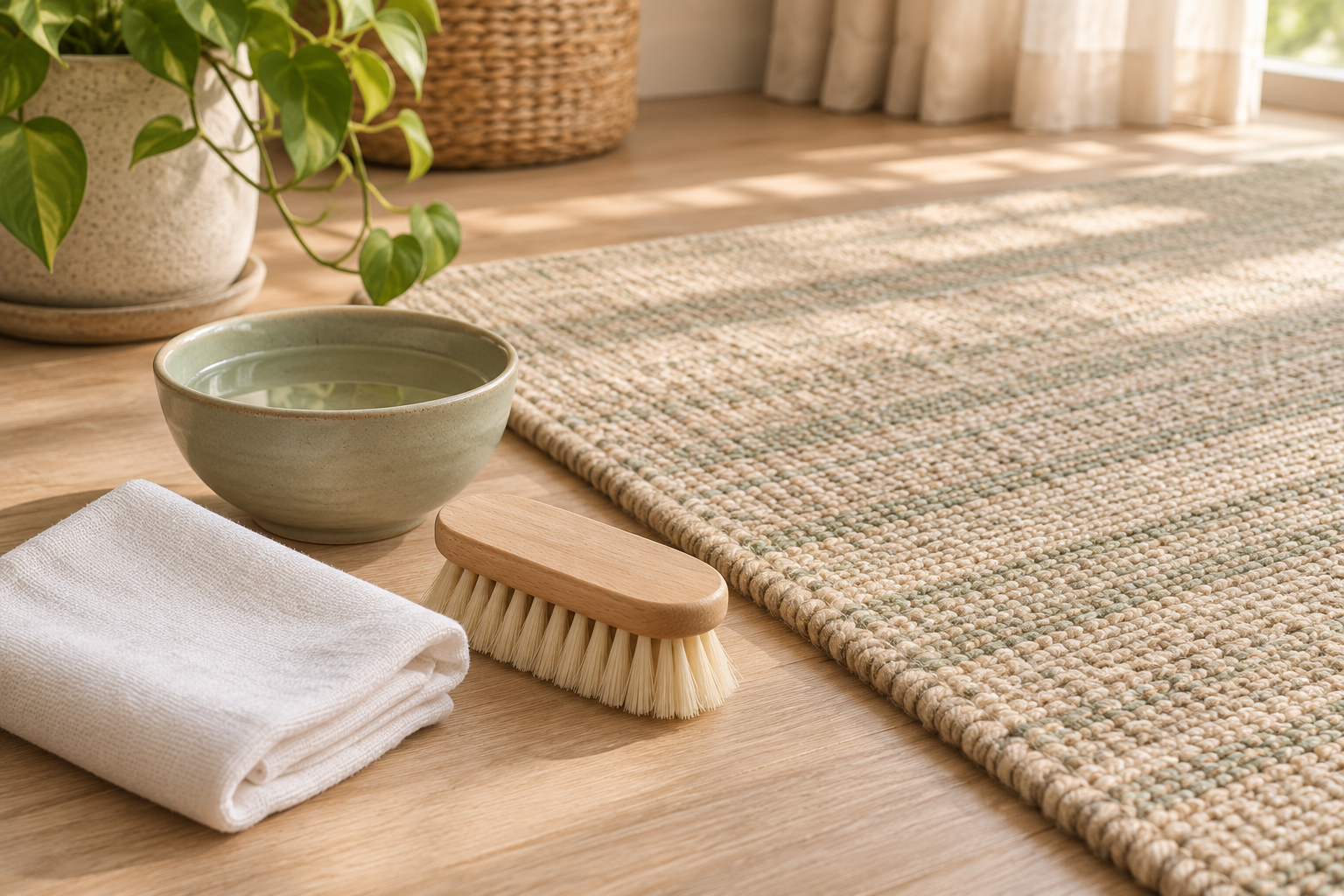
A spill is stressful, but quick, gentle action gives you a better starting point than scrubbing. The first goal is to contain the liquid or lift the solid material; the next is to choose a treatment that suits the rug’s fibers and dyes.
1. Pause and check the material
Find the care label if you can. If the rug is silk, viscose, jute, sisal, coir, seagrass, hand-dyed, antique, or of unknown construction, avoid adding water or a general-purpose cleaner until you have checked the maker’s advice or spoken with a specialist. Some fibers are especially sensitive to moisture and can develop permanent-looking water marks or pile distortion.
2. Blot liquids with a clean white cloth
Place a clean, absorbent white cloth or paper towel on the spill and press gently to transfer liquid. Work from the outside toward the center to help keep the spot contained. Use a clean part of the cloth as it absorbs the spill. Do not scrub, brush aggressively, or pour water onto the rug.
For a thicker spill, carefully lift excess material with a spoon or another blunt edge before blotting. Avoid pushing the material down into the pile. Let dry particles dry fully before vacuuming only when the rug maker permits that method.
3. Choose a treatment for the specific rug
There is no universal solution that is safe for every rug and every stain. If the manufacturer permits a particular product or water-based treatment, follow its directions carefully and test on an inconspicuous area first. Where the directions call for a damp cloth, apply a small amount to the cloth rather than saturating the rug.
Stop if color transfers, the surface changes, or the spot spreads. Do not mix cleaning chemicals, and avoid bleach or an unfamiliar home remedy simply because it worked on another material. If the care label is missing, a professional rug cleaner can help identify the fiber and treatment options.
4. Dry the rug and check underneath
Blot away remaining moisture as the manufacturer directs. Do not leave the rug resting over a wet pad or floor. A fan and appropriate ventilation may help a permitted treatment dry, but large or heavily saturated rugs can be difficult to dry completely at home.
For substantial water damage, the U.S. EPA recommends drying damp materials promptly, ideally within 24–48 hours. Contaminated floodwater, persistent dampness, or suspected mold needs appropriate specialist advice; ordinary spot cleaning is not a substitute for water-damage remediation.
What about old or stubborn stains?
Do not keep adding different products in the hope that one will work. Note what caused the stain, when it happened, and which products have already been used. That information can help a qualified cleaner select a treatment and avoid an unwanted reaction.
Some discoloration may be dye loss or fiber damage rather than removable soil. A professional can assess what is practical, but no method can promise that every mark will disappear.
A small spill kit to keep nearby
Keep a few clean white cloths or plain white paper towels handy and store the rug’s care instructions where you can find them. Only add a treatment product if it is suitable for the rug and you understand its label. Simple preparation is more useful than a cupboard full of untested chemicals.
References: The Carpet and Rug Institute: Cleaning and Maintenance, The WoolSafe Organisation: Fine Fibres, and U.S. EPA: Moisture Control. Check the care label for your specific rug.